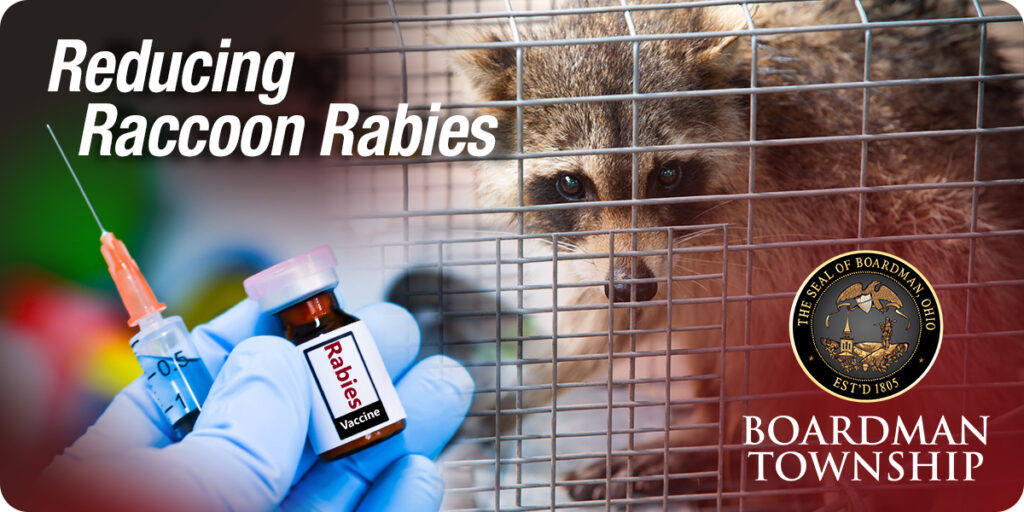
Efforts to Reduce and Eliminate Raccoon Strain Rabies
Rabies is a virus that affects warm-blooded animals, including wild animals, pets, and humans. Without prompt treatment, rabies is nearly always fatal in unvaccinated pets and humans. Since 2022, there have been six Raccoon Variant Rabies positives detected in Mahoning County.
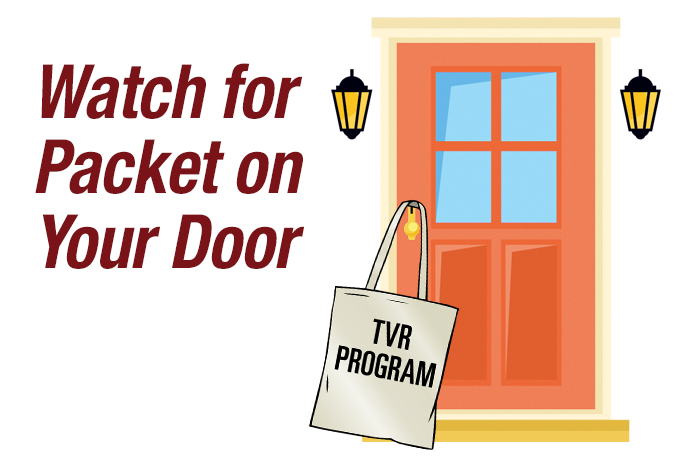
USDA is Providing a trap and release program for rabies in Boardman Township. If you receive the following packets on your door, this is a program being provided currently for 2026.
|
|
The Health District is working with the USDA APHIS Wildlife Services to reduce and eliminate raccoon strain rabies from your area. Since many of the target raccoon populations are in residential neighborhoods, your participation in this Trap, Vaccinate and Release (TVR) program is crucial. We are asking residents for permission to place cage traps on your property for a few days over the spring and summer to catch raccoons.
After being caught in the trap, healthy raccoons will be vaccinated and released on the property where they were trapped. Releasing rabies-vaccinated raccoons not only protects that individual animal but helps interrupt the disease cycle and reduce the number of rabid animals in Mahoning County.
If you are willing to participate in this program, please sign the enclosed consent document, place it in the plastic bag, and hang it on your front door.
Once you have hung it on your door, please call Wildlife Services at (330) 726-3386 and give your name, address, and daytime phone number along with an indication that you are giving permission for the TVR program on your property. A USDA Wildlife Services employee will then collect the signed permission form.
Exact dates of trapping for each property cannot be scheduled in advance due to differences in the weather and trapping success, but when the traps have been set in your yard, a notice will be left in a bag on your front door. Wildlife biologists and technicians will have signs on their vehicles so they will be easily identified. When trapping is occurring, it is recommended residents keep an eye on their pets when outdoors to make sure they do not come into contact with a trapped animal.
Thank you very much for your consideration. If you do not wish to have traps in your yard, remember your neighbors may elect to participate, so please watch your children and pets while they are outside. As a final reminder, please keep your pets current on rabies vaccinations and teach children not to handle animals that are unfamiliar to them.
Frequently asked questions about Trap, Vaccinate & Release Programs (TVR)
1.) Why does USDA Wildlife Services perform TVR?
USDA Wildlife Services traps, vaccinates, and releases raccoons with the goal of stopping the westward spread of raccoon strain rabies in the United States, and to protect you and your pets from rabies.
2.) Is there a fee/cost to participate in the TVR program?
There is no cost for participating in this program.
3.) How do I know when you will be setting traps in my yard/ and how often will USDA Wildlife Services check them?
A notice will be hung on your door indicating that traps have been set. Traps will usually remain on your property for 3 to 5 days. If additional time is needed another notice will be hung on your door. Traps are checked by USDA Wildlife Services at least once every 24 hours, usually in the morning or early afternoon.
4.) Why are the animals released back onto my property and not completely removed?
Raccoons are released onsite because it is illegal to relocate a wild raccoon because of the potential to spread disease. If you are experiencing problems with nuisance animals and would like them removed, you may hire a licensed nuisance animal trapper at your own expense.
5.) What do I do if there is a wild animal in a trap on my property?
USDA Wildlife Services and your local health department recommend that you stay away from the animal and keep pets and children away as well. USDA Wildlife Services personnel check traps every 24 hours and will release the animal upon arrival.
6.) What do I do if there is a domestic pet (ex. pet cat or dog) in the trap on my property?
The traps used for this project are meant to capture animals live and unharmed It is recommended that you wait for USDA Wildlife Services personnel to arrive and release the animal.
7.) I don’t understand what the control methods are on the referenced agreement?
Cage trap – box style trap used to capture animals live and unharmed.
Catch pole – used to restrain a sick or strange acting animal that could potentially be wandering around on your property.
5:1 Ket/Xyl – used to sedate animals. Used rarely on this project and only by USDA employees officially certified to do so.
8.) What if I don’t want TVR on my property?
It is every resident’s choice to participate or opt not to participate in this program.
9.) If I have further questions regarding trapping, who do I call?
Please call the Health District at 330-270-2855. If the Health District cannot answer your questions, they may refer you to USDA Wildlife Services for more information.